
Beyond the Screen: Can AI Help Young People Shape Their Own Futures?
2026 Geneva Forum - Speaker Short Feature
A contribution by Mark Hooley, published ahead of his intervention in the Education and Project Based Learning session of the 2026 Geneva Forum.
Keywords:
Artificial Intelligence, Higher Education, Project-Based Learning, Student Agency, Youth Empowerment, Career Guidance, Educational Innovation, Learner Autonomy.
|
Authorship:
Mark Hooley, GOER - Global Online Education Regulator
Artificial intelligence is becoming an increasingly familiar part of how young people learn, explore opportunities and think about their futures. But an important question remains: can AI help university students move beyond the screen - from exploring ideas digitally to tackling real-world challenges with confidence and independence?
This question sits at the heart of “ Using AI to Move Beyond the Screen ” a GIEE case study developed by GOER in partnership with Exel Tutor. The research will explore how AI-supported learning and career guidance influence university students’ motivation, confidence and sense of agency as they consider their future pathways and take practical steps towards them.
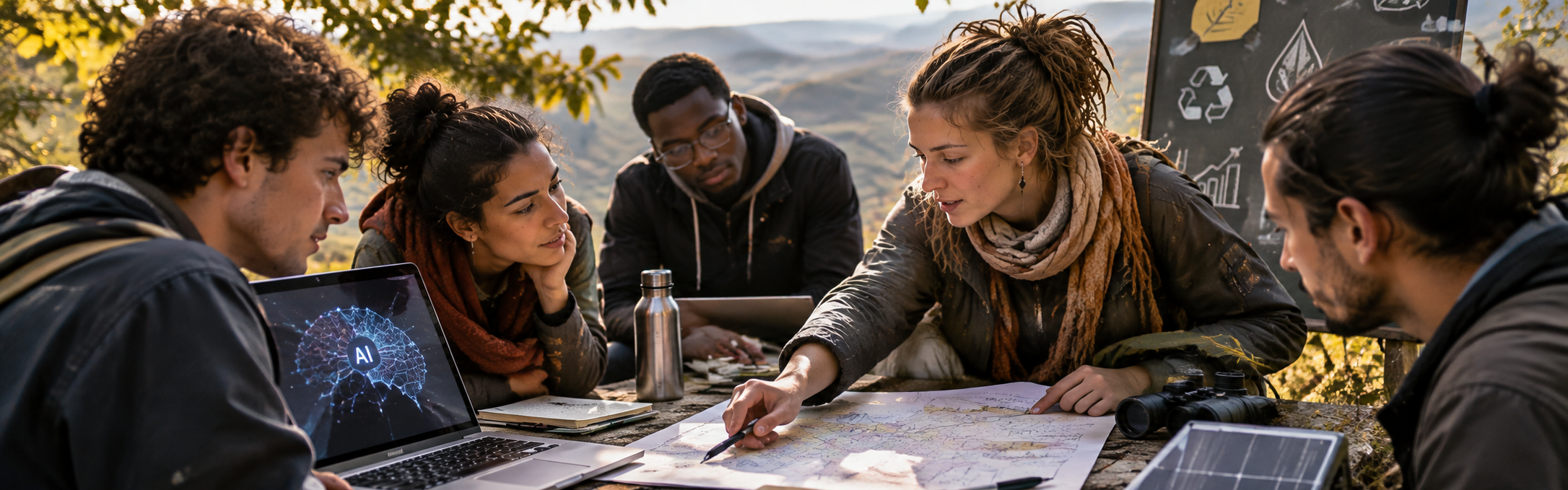
Central to the ExelAcademy approach is project-based learning. Rather than treating AI as a tool that simply delivers answers, Exel Tutor supports students as they work through purposeful, real-world scenarios. Students might investigate a community challenge, design a more sustainable system or develop and test a solution to a problem they care about. These projects give learning a clear purpose and create opportunities to connect academic knowledge with situations beyond the classroom.
In this model, the project remains the primary learning environment. Students encounter a problem, identify what they need to understand, explore relevant concepts with support from an AI tutor and then apply that understanding to move their project forward. When they need deeper knowledge, they can explore explanations, examples and practice before returning to the challenge. The cycle encourages them to investigate, decide, design, collaborate, create, test and improve—rather than remain passive recipients of information.
The ambition is to help students move from screen-based exploration into real-world thinking and action: making choices, solving open-ended problems, working with others and seeing how their knowledge can make a difference. AI can provide timely explanations and feedback, but
|