
Proceedings and Declaration - Rights of Nature - Geneva Forum 2025
Rights of Nature – For non-anthropocentric ecological justice
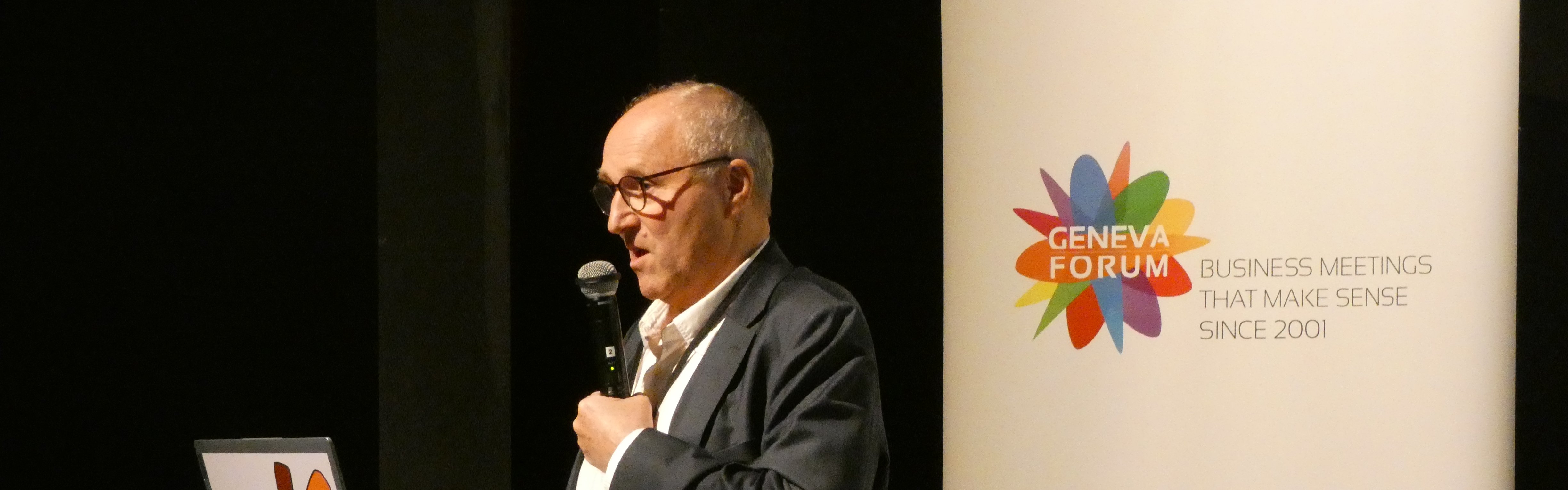
17th Geneva Forum – Théâtre du Centre l’Espérance, Geneva – Thursday, December 11, 2025 afternoon
14th Annual International Conference on the Rights of Nature for Peace and Development;
The Rights of Nature: cross-cutting impact projects for International Geneva.
Gathered in Geneva, the participants of the Annual International Conference on the Rights of Nature worked on the transition from principles to concrete implementation: legal recognition of ecosystems, rights of the Ocean, governance with Nature, informal education, transformation of narratives, and articulation between Human Rights and the Rights of Nature.
The session confirmed that the Rights of Nature are no longer only a matter of ethical intuition or legal advocacy. They are gradually becoming a structured field of action, supported by constitutional, citizen, judicial, economic, educational, territorial and international initiatives.
Recognizing the Rights of Nature does not mean adding a new subject to law: it means changing the starting point of our decisions.
This declaration summarizes the main elements exchanged during the conference, the lessons drawn from the presentations, the operational positions proposed for 2026, as well as the calls for partnerships addressed to legal, institutional, educational, scientific, economic, territorial and citizen actors.
|
General observation from the presentations
The presentations and exchanges of the afternoon converged toward a central observation: the recognition of the Rights of Nature is becoming a structuring lever for rethinking law, the economy, education, governance and public policies from the standpoint of living systems.
- The Rights of Nature make it possible to move beyond an approach in which Nature is only considered as:
- a resource,
- a backdrop,
- an object of protection,
- or a simple support for human activities.
- They invite us to recognize ecosystems, species, rivers, wetlands, the Ocean and other living entities as:
- subjects of rights,
- stakeholders,
- sources of responsibility,
- governance partners,
- and material foundations of Human Rights.
- Scaling up the movement now depends on several conditions:
- documenting existing initiatives,
- strengthening legal frameworks,
- training public, economic and citizen actors,
- including continents that are still under-represented,
- linking the Rights of Nature to Human Rights,
- and building concrete implementation mechanisms.
|