
Proceedings and Declaration - Conflict Mediation, Peace and Security - Geneva Forum 2025
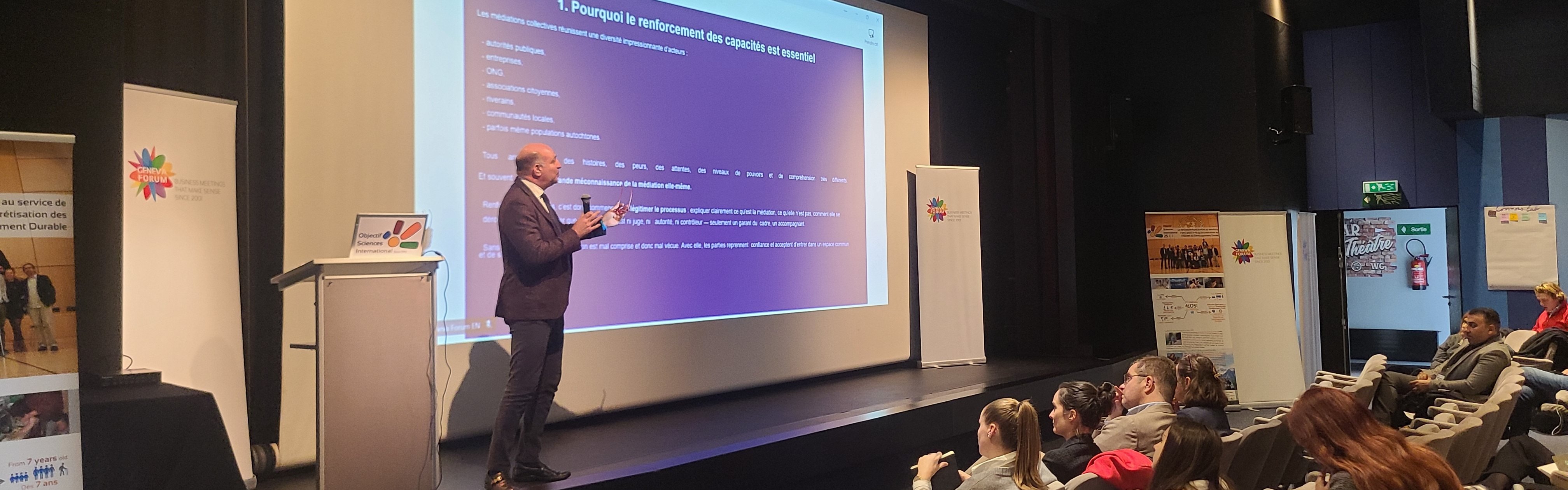
Conflict Mediation, Peace and Security – Citizen diplomacy, leadership and impact projects
17th Geneva Forum – Théâtre du Centre l’Espérance, Geneva – Thursday, December 11, 2025 morning
6th Annual International Conference on Conflict Mediation for Peace and Development;
Mediation, Citizen Diplomacy and financing Impact Projects: anticipating fractures to preserve Peace and global Security.
Gathered in Geneva, the participants of the Annual International Conference on Conflict Mediation explored new forms of conflict prevention, resolution and transformation in a world marked by geopolitical, social, climatic, economic and territorial fractures.
The session confirmed that mediation can no longer be conceived solely as a one-off intervention by external experts when conflict has already broken out. It is becoming an infrastructure for peace: a collective capacity to listen, connect, defuse, restore trust, design fair processes, and enable individuals and communities alike to become actors in their own future again.
Lasting peace is not decreed only through agreements: it is built through capacities, safe spaces, bonds of trust and common projects.
This declaration summarizes the main elements exchanged during the conference, the lessons drawn from the presentations, the operational positions proposed for 2026, as well as the calls for partnerships addressed to mediators, public institutions, multilateral actors, companies, young leaders, media, funders and impact project leaders.
|
General observation from the presentations
The presentations and discussions of the morning converged toward a central observation: mediation is becoming a strategic lever for stability, prevention and transformation, provided it is conceived as a shared capacity and not as a simple resolution procedure.
- Contemporary conflicts are no longer only military or diplomatic. They are also:
- social,
- territorial,
- economic,
- climatic,
- community-based,
- informational,
- technological,
- linked to natural resources,
- and linked to the loss of trust between actors.
- Mediation must therefore articulate several levels:
- official diplomacy,
- private diplomacy,
- citizen diplomacy,
- community mediation,
- local leadership,
- public communication,
- responsible innovation,
- and the financing of impact projects capable of reducing the root causes of tensions.
- The Conference also highlighted a major evolution: peace is becoming a strategic asset. It conditions the stability of territories, economic continuity, human security, the attractiveness of nations, investor confidence and the ability of societies to cooperate over time.
|