
Traditional medicine, One Health, integrated health and impact entrepreneurship: bringing health back into harmony with nature
By Thomas EGLI
Founder of the Geneva Forum — Expert contributor to the United Nations Harmony with Nature programme
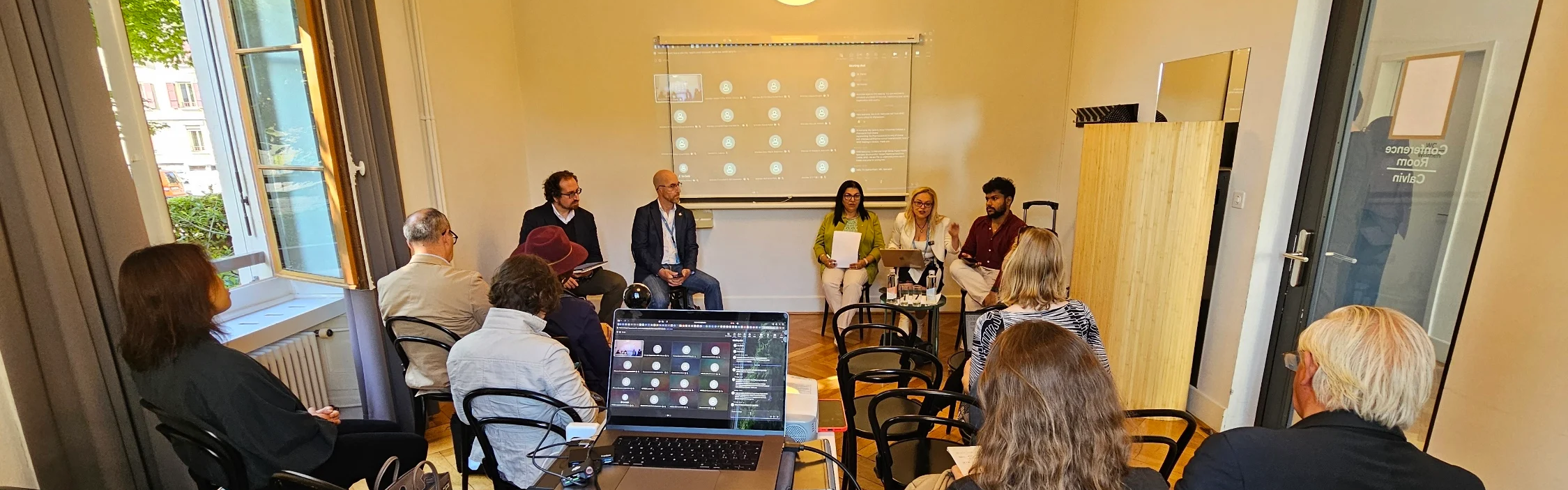
This article is written in the context of Thomas EGLI’s contribution to the event “Traditional Medicine at the Nexus of Climate, Biodiversity, and Land Restoration (Rio Conventions)”, organized as part of the Health Diplomacy House, by the Health Diplomacy Alliance, on the sidelines of the 2026 WHO General Assembly at the UN, in Geneva (May 2026).
This conference was organized by Mr. Gokul Rajendran (CEO @ Govardhan & GITMA) and brought together the speakers and guests Mr. Gokul Rajendran (CEO @ Govardhan & GITMA), Dr. Naeema Al Qasseer (Global Health & Development Expert & Former WHO Senior Official), Ms. Cristina Romanelli (Programme Officer, Biodiversity, Climate Change and Health, WHO), Mr. Thomas Egli, (Founder @ Geneva Forum and Expert for Harmony with Nature Programme of the United Nations), Dr. Mona El-Sherbini (Asso. Prof. of Infectious Parasitic Disease @ Cairo University, Egypt), with the moderator Mr. Domenico Vito (Founder @ International One Health Conference).
Through traditional medicine, a much broader question arises: how can we bring our health systems, economies, knowledge, funding models and societies back into harmony with nature? Traditional medicine is not merely a care practice inherited from the past. It is one of the places where the interdependence between human health, biodiversity, climate, living soils, Indigenous knowledge, local communities and economic models is most clearly revealed.
Health does not begin in the hospital. It begins in the soil, in water, in forests, in plants, in microbiomes, in social relationships, in the family, at school, in cultures, in living conditions and in the balances of the living world that enable human beings, animals, plants and territories to remain healthy.
|
Traditional medicine is not an isolated sector: it is a living interface
Traditional medicine is often presented either as cultural heritage or as a set of therapeutic practices to be documented, validated or regulated. These dimensions are important, but they are insufficient.
Traditional medicine is first and foremost a living interface between several systems: ecosystems, knowledge, cultures, care practices, local economies, communities, generations and territories.
It compels us to understand that human health is not separate from the health of plants, animals, soils, waters, forests and climates. It shows that biodiversity is not merely a resource external to medicine: it is part of medicine itself.
A medicinal plant is not just an “ingredient”. It belongs to an environment. It depends on soil, climate, pollinators, harvesting practices, forms of transmission, knowledge of use, and a balance between extraction and regeneration. Protecting it outside its ecosystem is like protecting a word while forgetting the language that gives it meaning.
This is why traditional medicine is now at the heart of a global strategic issue: it naturally connects the three Rio Conventions — climate, biodiversity, desertification and land restoration — to human health and the health of societies.
Without living biodiversity, there is no living pharmacopoeia. Without guardian communities, there is no transmission of knowledge. Without restored territories, traditional medicine risks becoming memorial heritage instead of remaining a living practice.
OneHealth and integrated health: understanding the causes, not just treating the symptoms
By OneHealth, or an integrated health approach, we should not only understand cooperation between human medicine and veterinary medicine, nor merely increased vigilance in the face of zoonoses. This approach must be understood in a broader sense: the health challenges of the twenty-first century emerge at the intersection of human, animal, plant, environmental, social, economic and cultural systems.
Climate change, biodiversity loss, antimicrobial resistance, zoonotic diseases, food transitions, pollution, soil deg
|