
Proceedings and Statement Impact Finance - Philanthropy, Investment and Blended Finance Geneva Forum 2025
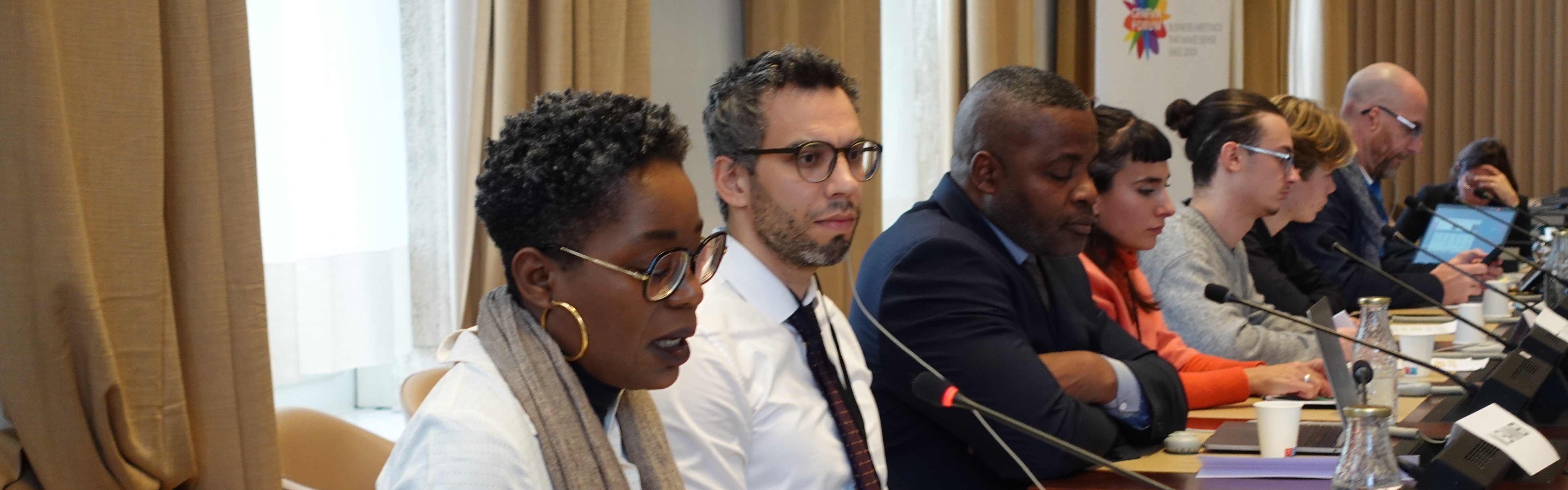
17th Geneva Forum – Palais des Nations (UN), Geneva – Monday, 8 December 2025
10th Annual International Conference on Philanthropy and Impact Investments for Peace and Development;
Impact finance and partnership opportunities: transdisciplinary projects, new sources of funding to address the objectives of the United Nations and non-governmental organizations.
Gathered at the Palais des Nations in Geneva, participants – project leaders, philanthropy practitioners, investors, businesses, actors from International Geneva, and partners – shared a common observation: systemic challenges require cross-sector (inter-silo) projects, sound economic models, and a common language of impact that can make projects understandable, comparable, fundable, and manageable over time.
The session confirmed that Geneva retains a unique capacity to connect diplomacy, finance, innovation, and field action. This connection must now translate into implementation mechanisms: replicable methods, partnership coalitions, field-based evidence, and verifiable impact trajectories.
When evidence becomes shareable, financing becomes possible. When partnership becomes operational, impact scales up.
NB: Two other statements are published separately, one regarding the alignment of International Geneva with Impact Finance, and the other specific to the Dry Run of the AGILE tool.
|
General Observations from the Presentations
The five general presentations on impact finance that preceded the rest of the afternoon (see other statements) converged on one central point: impact finance works when it finances entire systems, not isolated actions.
- Truly fundable projects combine:
- a territorial logic (ecosystems, inhabitants, uses, risks),
- an evidence-based logic (data, traceability, verification, monitoring),
- a governance logic (rights, responsibilities, oversight, accountability),
- an economic model logic (real costs, sustainability, mission alignment).
- Scaling up depends less on “ideas” than on the ability to secure trust:
- ecological trust (biodiversity, resilience, long-term effects),
- scientific trust (protocols, data quality),
- financial trust (transparency, leakage reduction, accountability),
- operational trust (field evidence, results tracking).
Presentation Proceedings
| ● Théophile DAUVE and Raphael GALLOIS, Objectif Sciences International In London, an Example of Successful Urban Renewal | |
| ● Arno GATTOLLIAT OSI PANTHERA, a Participatory Research Project | |
| ● Eric GABIRAULT The Virtuous Platform – A Model of Digital and Ethical Trust for Financial Autonomy in the Global South Impact finance now opens up new partnership opportunities that can support transdisciplinary projects with high social, economic, and environmental value. In this context, the creation of a virtual platform (VP) for the sovereignty and direct financing of communities in the Global South represents a strategic innovation aligned with SDGs 1, 9, 13, and 17. Designed as a “Digital and Ethical Guardian,” it ensures that the value stemming from the preservation of indigenous knowledge remains in the hands of its holders. The VP concretely addresses two major obstacles to funding: information asymmetry, by providing reliable and transparent traceability of on-the-ground impact, and digital dependency, by preventi |
|